Electric vehicle charging equipment refers to the infrastructure and technology that enable electric vehicles (EVs) to recharge their batteries. As transportation increasingly shifts toward electrification, charging equipment has become a foundational element supporting sustainable mobility, energy efficiency, and reduced emissions. This ecosystem includes charging stations, connectors, power management systems, monitoring software, and grid integration technologies.
The development of this infrastructure emerged alongside advancements in battery technology and climate-focused transportation strategies. Governments, businesses, urban planners, and energy providers continue expanding charging networks to support growing EV adoption worldwide. High-value keywords often associated with this topic include EV charging infrastructure, fast charging technology, electric vehicle charging station network, smart grid integration, battery management systems, renewable energy charging, EV charging analytics, and DC fast charging solutions.
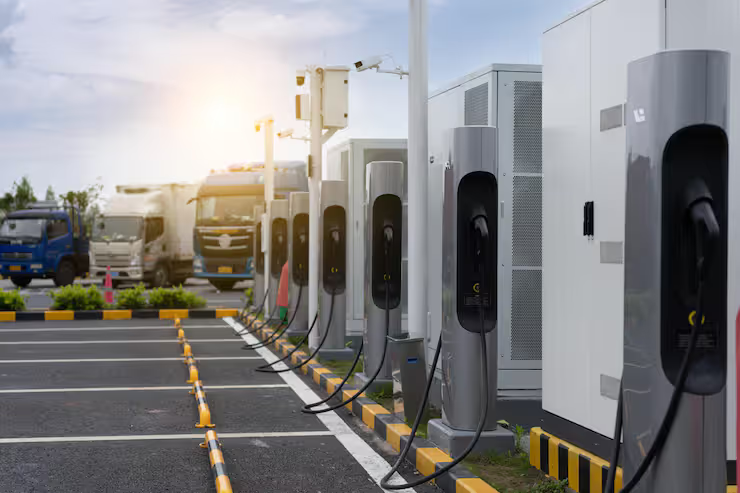
Why Electric Vehicle Charging Equipment Matters Today
The relevance of EV charging equipment extends beyond vehicle convenience. It directly impacts energy sustainability, urban planning, environmental goals, and economic transformation.
Key reasons for its growing importance:
-
Cleaner transportation transition: Electrified mobility helps reduce greenhouse gas emissions compared with conventional fuel vehicles.
-
Energy efficiency improvements: Electric drivetrains convert energy more efficiently than combustion engines.
-
Urban infrastructure evolution: Cities integrate charging systems into buildings, parking facilities, highways, and workplaces.
-
Technological innovation: Smart charging, AI-driven load management, and renewable integration continue advancing rapidly.
-
Consumer confidence: Reliable charging availability encourages broader EV adoption.
Industries influenced include automotive manufacturing, renewable energy development, utility companies, software analytics, infrastructure planning, and environmental research. As adoption grows, demand for skilled expertise, advanced research, and technical innovation also increases.
Types of EV Charging Equipment
| Charger Type | Typical Power Range | Charging Speed | Common Usage |
|---|---|---|---|
| Level 1 Charging | ~1–2 kW | Slow overnight charging | Residential environments |
| Level 2 Charging | ~7–22 kW | Moderate charging speed | Commercial parking, homes |
| DC Fast Charging | 50–350 kW+ | Rapid charging capability | Highways, urban hubs |
| Wireless Charging | Emerging tech | Experimental stage | Pilot projects |
This classification reflects power output and charging speed rather than commercial positioning. Innovations continue improving efficiency, interoperability, and grid stability.
Recent Developments and Industry Trends
The past year has seen significant progress in electric vehicle charging technology and infrastructure expansion. Several global trends illustrate how rapidly the sector is evolving.
Ultra-fast charging expansion (2025):
Charging equipment exceeding 300 kW output has gained traction, enabling shorter charging durations for compatible vehicles.
Smart charging and grid interaction:
Advanced load balancing systems help manage electricity demand dynamically, preventing grid overload while optimizing energy usage.
Renewable energy integration:
Solar-powered charging hubs and battery storage integration are becoming more common, aligning EV charging with clean energy objectives.
Interoperability improvements:
Standardized connectors and software platforms help vehicles access broader charging networks without compatibility barriers.
Battery innovation synergy:
Solid-state battery research and improved lithium-ion chemistries influence charging speed, efficiency, and infrastructure requirements.
EV Adoption Growth Snapshot
| Year | Global EV Stock Estimate | Charging Points Growth Trend |
|---|---|---|
| 2023 | Rapid expansion phase | Infrastructure scaling |
| 2024 | Continued adoption growth | Smart charging adoption |
| 2025 | Accelerated electrification | Ultra-fast charging focus |
This trend indicates parallel growth between EV ownership and charging infrastructure development.
Regulations, Policies, and Government Programs
Electric vehicle charging equipment development is strongly influenced by regulatory frameworks, environmental targets, and public infrastructure initiatives. In India and many other countries, policy measures encourage electrification while emphasizing safety and technical standards.
Important policy influences include:
-
National Electric Mobility Mission initiatives (India): Promote EV adoption, infrastructure deployment, and technology development.
-
Charging infrastructure guidelines: Establish technical safety standards, connector compatibility, and grid integration rules.
-
Renewable energy alignment policies: Encourage integration of solar and wind energy with charging infrastructure.
-
Urban planning regulations: Support installation of charging points in residential complexes, commercial facilities, and public parking areas.
-
International emissions targets: Climate agreements drive electrification strategies globally.
Regulations primarily focus on safety, interoperability, grid stability, environmental sustainability, and technological innovation rather than commercial promotion.
Helpful Tools, Apps, and Resources
Various digital resources support understanding, monitoring, and optimizing EV charging infrastructure. These tools focus on analytics, navigation, and educational insights rather than commercial transactions.
Useful categories include:
Charging station locator apps
-
Real-time charger availability tracking
-
Route planning integration
-
Charging compatibility filters
Energy analytics platforms
-
Charging pattern analysis
-
Grid load monitoring
-
Renewable energy optimization insights
Research databases and educational portals
-
EV technology reports
-
Policy updates
-
Technical standards documentation
Simulation and planning software
-
Infrastructure deployment modeling
-
Load forecasting tools
-
Urban mobility planning frameworks
Technical standards organizations
-
Connector standard documentation
-
Safety guidelines
-
Certification frameworks
These resources help researchers, planners, vehicle owners, and policymakers stay informed.
Frequently Asked Questions About EV Charging Equipment
What is the difference between AC and DC charging?
AC charging uses alternating current supplied through onboard vehicle converters, while DC charging delivers direct current directly to the battery, enabling faster charging speeds.
How long does EV charging typically take?
Charging duration depends on charger power, battery capacity, and vehicle compatibility. Level 1 may require many hours, while high-power DC charging significantly reduces charging time.
Is charging infrastructure compatible across all vehicles?
Many regions follow standardized connectors, though compatibility varies by manufacturer and charging standard.
Can renewable energy power EV charging stations?
Yes. Solar, wind, and energy storage integration increasingly support charging infrastructure sustainability goals.
Does frequent fast charging affect battery lifespan?
Battery management systems are designed to protect battery health, though balanced charging practices are generally recommended.
Key Technology Components Overview
| Component | Function | Importance |
|---|---|---|
| Charging Connector | Physical interface | Vehicle compatibility |
| Power Electronics | Voltage conversion | Efficiency optimization |
| Communication Protocol | Data exchange | Smart charging capability |
| Energy Storage Systems | Backup power | Grid stability support |
| Monitoring Software | Performance analytics | Infrastructure optimization |
Understanding these components helps clarify how charging ecosystems function holistically.
Conclusion
Electric vehicle charging equipment represents a cornerstone of modern sustainable transportation. As electrification accelerates globally, reliable and efficient charging infrastructure becomes essential for environmental progress, technological innovation, and mobility transformation.
Advancements in EV charging infrastructure technology, smart grid integration, battery management systems, renewable energy charging solutions, and electric vehicle charging analytics continue shaping this evolving sector. Policies, technical standards, and digital tools support infrastructure development while encouraging safe and efficient deployment.