Electric charging stations are dedicated points where electric vehicles (EVs) recharge battery power through controlled electrical supply systems. These stations emerged alongside the global transition toward electric mobility, driven by environmental awareness, urban air quality concerns, and advances in battery technology.
An electric charging station typically includes power conversion equipment, connectors, safety systems, monitoring software, and energy management components. Charging may occur at residential locations, commercial complexes, highways, parking structures, or public infrastructure networks.
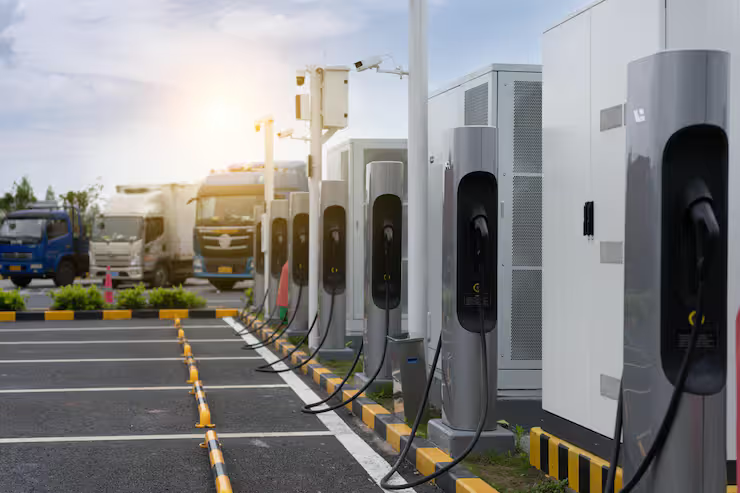
Three common charging levels exist:
-
Level 1 AC charging: Standard household electricity supply, slower charging pace.
-
Level 2 AC charging: Higher voltage infrastructure commonly found in workplaces and public spaces.
-
DC fast charging: High-power charging designed for rapid battery replenishment during travel.
These technologies support electric mobility infrastructure expansion and help maintain sustainable transportation goals.
Why Electric Charging Infrastructure Matters Today
Electric charging stations now play a central role in energy transition strategies worldwide. Increased electric vehicle adoption means dependable charging networks directly affect mobility planning, environmental performance, and infrastructure modernization.
Key reasons this topic holds significance:
-
Reduced emissions: Electric mobility supports lower greenhouse gas output compared with traditional fuel vehicles.
-
Energy diversification: Integration with renewable energy sources encourages sustainable electricity ecosystems.
-
Urban development: Smart city initiatives frequently include EV charging infrastructure expansion.
-
Technology innovation: Battery research, grid optimization, and charging analytics continue evolving.
Stakeholders influenced by EV charging growth include:
| Stakeholder Group | Impact Area | Example Outcomes |
|---|---|---|
| Vehicle owners | Mobility convenience | Wider charging accessibility |
| Energy planners | Grid optimization | Demand response strategies |
| Urban authorities | Environmental goals | Reduced pollution indicators |
| Technology firms | Innovation focus | Advanced charging hardware |
Reliable charging infrastructure reduces range anxiety, supports sustainable commuting patterns, and enhances confidence in electric mobility adoption.
Recent Developments, Industry Trends, and Technology Updates
The past year has shown noticeable progress in electric mobility infrastructure, with multiple regions accelerating deployment of high-capacity charging systems and renewable integration initiatives.
Important developments observed during 2024–2025 include:
-
Expansion of ultra-fast charging corridors along major highways.
-
Integration of solar-powered charging hubs in several countries.
-
Growth in vehicle-to-grid (V2G) technology pilots allowing electricity feedback to grids.
-
Improved battery charging efficiency reducing energy losses.
-
Standardization of charging connectors for cross-compatibility.
A simplified trend overview:
| Trend Area | Direction | Potential Influence |
|---|---|---|
| Fast charging technology | Increasing power output | Reduced charging duration |
| Renewable energy charging | Growing adoption | Lower carbon footprint |
| Smart grid integration | Higher digitalization | Optimized electricity use |
| Charging analytics software | Expanding data insights | Better infrastructure planning |
These advancements reflect ongoing innovation in electric mobility infrastructure while improving user experience and environmental outcomes.
Regulatory Environment, Policies, and Government Initiatives
Government policies significantly shape electric charging infrastructure development. Regulations typically focus on safety, interoperability standards, grid compatibility, and environmental sustainability.
Examples of policy influence in India and globally:
-
National electric mobility missions encouraging EV adoption.
-
Infrastructure guidelines promoting public charging accessibility.
-
Renewable energy integration incentives within transport planning.
-
Standardized connector protocols to ensure compatibility.
-
Urban sustainability frameworks supporting low-emission mobility.
India’s electric mobility ecosystem continues evolving through initiatives encouraging infrastructure growth, research, and environmental compliance. Regulations also emphasize safety certification, energy efficiency standards, and grid stability considerations.
Understanding these policies helps stakeholders align infrastructure planning with regulatory expectations.
Tools, Platforms, Apps, and Helpful Resources
Several digital tools assist users, planners, and researchers in understanding electric charging ecosystems. These resources enhance navigation, infrastructure mapping, and energy awareness.
Useful resource categories include:
Charging locator applications
-
Real-time station mapping
-
Connector compatibility filters
-
Charging speed indicators
Energy analytics platforms
-
Electricity consumption monitoring
-
Charging pattern analysis
-
Grid optimization insights
EV range calculators
-
Estimated travel distance
-
Battery performance indicators
-
Charging frequency estimation
Educational knowledge hubs
-
Technical documentation
-
Infrastructure research papers
-
Policy updates and reports
These resources support informed decisions, infrastructure planning, and EV adoption awareness without promotional messaging.
Frequently Asked Questions About Electric Charging Stations
What types of electric charging stations exist?
Common categories include Level 1 AC charging, Level 2 AC charging, and DC fast charging. Each differs in charging speed, voltage level, and intended usage environment.
How long does EV charging usually take?
Charging duration varies based on battery capacity, charging level, and infrastructure technology. Fast charging systems typically reduce charging time significantly compared with standard AC charging.
Are electric charging stations environmentally sustainable?
Environmental impact depends on electricity source. Integration with renewable energy enhances sustainability outcomes and reduces emissions.
Can charging infrastructure support future vehicle growth?
Modern infrastructure planning increasingly incorporates scalable grid design, smart charging software, and energy storage systems to accommodate future EV adoption.
Is charging infrastructure standardized globally?
Standardization is improving, though regional variations still exist. Connector compatibility and communication protocols continue evolving.
Key Facts and Insights Summary
Electric charging stations represent a critical component of global mobility transformation. Rapid technological innovation, policy support, and environmental priorities continue shaping infrastructure growth.
Important facts to remember:
-
EV infrastructure expansion supports sustainable transportation goals.
-
Fast charging technology continues improving efficiency.
-
Government policies strongly influence deployment pace.
-
Renewable energy integration enhances environmental outcomes.
-
Digital tools help users navigate charging ecosystems effectively.
Conclusion Understanding the Future of Electric Mobility Infrastructure
Electric charging stations form the backbone of modern electric mobility infrastructure. As global transportation shifts toward sustainable energy systems, reliable charging networks help ensure practical adoption, environmental benefits, and technological advancement.
Continued research, infrastructure expansion, policy alignment, and technological innovation will shape how electric mobility evolves in the coming years. Awareness of charging technology, regulatory frameworks, and digital tools empowers individuals, planners, and organizations to better understand this rapidly developing sector.